
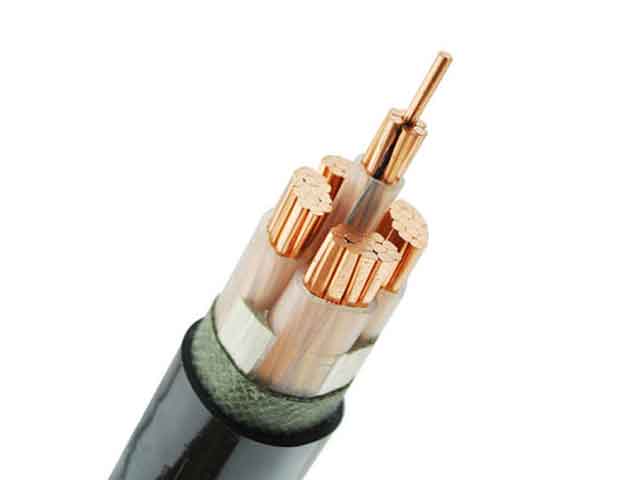
XLPE Insulated Power Cable
Our XLPE insulated power cables have excellent heat resistance, mechanical strength, insulation properties, and environmental friendliness. They are widely used in medium and low voltage power distribution and industrial installations, medium and high voltage transmission lines, large-scale engineering projects, densely populated and enclosed locations, power plants, and urban power grids.
XLPE Insulated Power Cable Usages:
Our Cross-linked polyethylene insulated cables are suitable for power distribution networks, industrial equipment, or other fields requiring large-capacity power. They are used for fixed installation on AC 50Hz power transmission and distribution lines with a rated voltage of 6kV to 35kV. Their main function is to transmit electrical energy.

Low Voltage Power Distribution and Industrial Laying (600V XLPE Cable and Below)
Low voltage XLPE insulated cables are suitable for fixed power transmission and power distribution in factories, workshops, buildings, schools, hospitals etc.
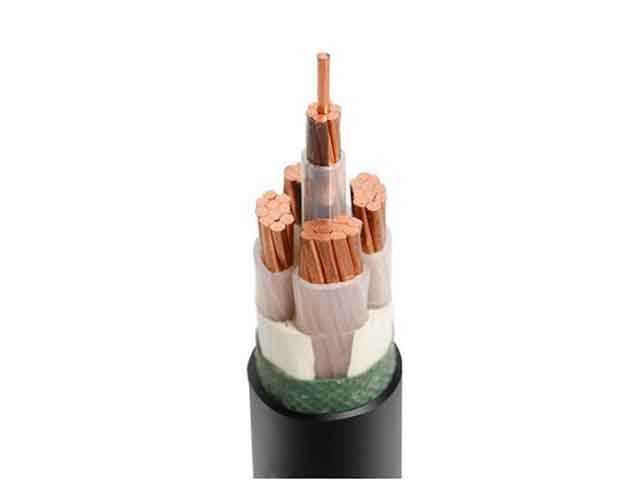
Medium and High Voltage Transmission Lines (10KV–220KV)
XLPE insulated cables have fully covered the medium and high voltage fields and are the mainstream choice for urban power grid transformation, substation incoming and outgoing lines, and long-distance power transmission.
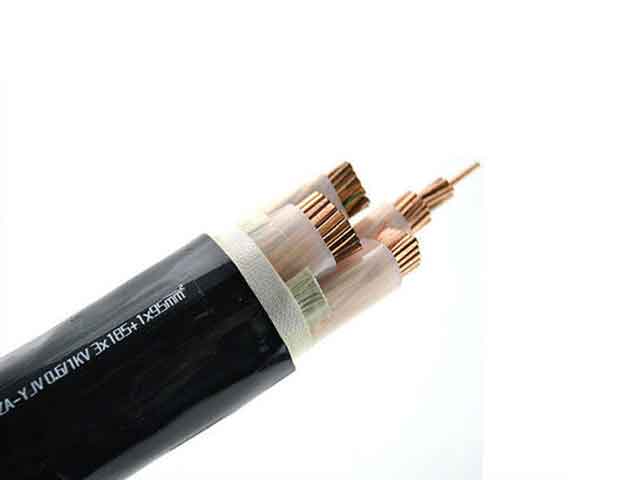
Large-scale Engineering Projects
In petrochemical, metallurgical and other applications where reliability is of paramount importance, Cross-linked polyethylene insulated cables are the preferred choice due to their resistance to chemical corrosion and high stability.
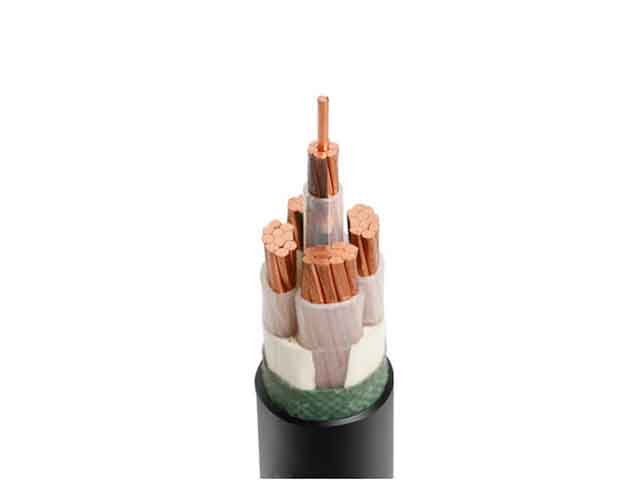
Renewable Energy
Cross-linked polyethylene insulated cables are used in solar PV and wind farm projects. XLPE cables have good moisture resistance, chemical resistance in harsh environments.

Crowded and Enclosed Spaces:
XLPE insulated cables with a halogen-free polyethylene sheath are environmentally friendly. When burned, XLPE insulation and polyethylene sheath produce only water and carbon dioxide, with no toxic gases.

Power Plants and Urban Power Grids
XLPE insulated cable serves as an important component of generator leads, substation internal connection lines, and urban main power grids.
XLPE Cable Types by Conductor Material
Copper and aluminum are the main conductor materials. Copper has excellent conductivity and a high current-carrying capacity. Aluminum has lower conductivity than copper and carries less current at the same conductor size. However, aluminum has a lower density than copper, making it more cost-effective. Both types of conductors are widely used in various fields.
Cu XLPE cable is a XLPE insulated cable with copper conductor. Copper is a core material for electrical energy transmission; copper conductors dominate in fields such as power systems, electronic equipment, and new energy sources due to their excellent physical and chemical properties.
- Excellent electrical conductivity.
- High current carrying capacity and low temperature rise.
- Superior mechanical properties.
- Reliable connection performance.
- Outstanding corrosion resistance and environmental adaptability.
- High safety and thermal stability.
- Long lifespan and low total cost of ownership.
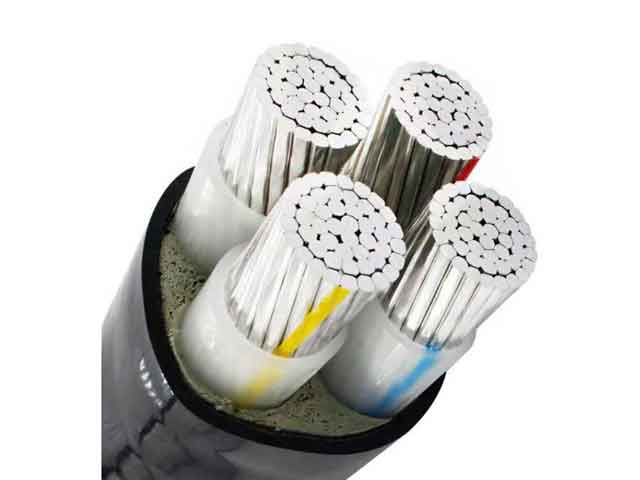
AL XLPE cable is a XLPE insulated cable with aluminum conductor. Although aluminum has lower conductivity than copper, the density of aluminum is much smaller. AL XLPE cable has an excellent conductivity-to-weight ratio and is much more cost-effective.
- Significant cost advantages
- Excellent lightweight properties
- Good corrosion resistance
- Good high-temperature adaptability
- Mechanical strength and flexibility (specifically for aluminum alloys)
- Abundant resources and stable prices
XLPE Cable Types by Armour
XLPE insulated power cables can be XLPE unarmoured cable and XLPE armored cable. XLPE armored cables include DSTA XLPE Armoured Cables, SWA & AWA XLPE Armoured Cables. They have different features and are widely used.

XLPE Unarmoured Cable
XLPE unarmoured cable, like CU/XLPE/PVC cables and AL/XLPE/PVC cables can be laid in overhead, indoor, tunnel, cable trench, and duct environments.

XLPE Armored Cable
XLPE unarmoured cable, like CU/XLPE/PVC cables and AL/XLPE/PVC cables can be laid in overhead, indoor, tunnel, cable trench, and duct environments.

DSTA XLPE Armoured Cables
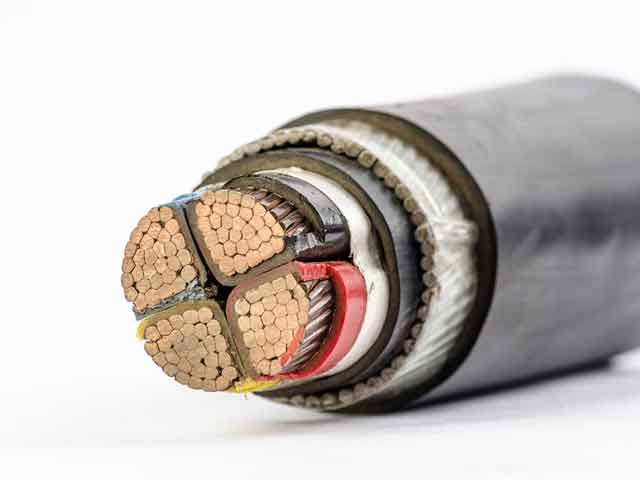
DSTA means Double Steel Tape Armoured. Due to the added armor layer, double steel-tape armored XLPE cables have higher mechanical strength and are suitable for laying environments with high requirements, such as direct burial.
SWA & AWA XLPE Armoured Cables
SWA & AWA means Steel Wire & Aluminum Wire Armoured. SWA & AWA armoured XLPE insulated cables have protective steel wire layer under an outer sheath, making they are able to withstand impact, crushing, and harsh weather.
XLPE Cable Types by Core Quantity
Common core configurations of XLPE insulated power cable include single core XLPE cable, 2 core XLPE cable, 3 core XLPE cable, 4 core XLPE cable, 5- core XLPE cable and 3+1 core XLPE cable. The selection of the number of cores in (cross-linked polyethylene) XLPE insulated power cables mainly depends on the type of power supply system, voltage level, and specific application scenario.
XLPE Insulated Cable Types by Voltage
Low voltage: 600V XLPE Power Cable and Below
Primarily used for fixed installations in urban power distribution networks, industrial facilities, and residential areas, 600V XLPE power cable, such as 0.6/1KV CU XLPE CABLE and 0.6/1KV AL XLPE CABLE, is suitable for indoor installation, trenches, pipelines, and loose soil.

0.6/1KV CU/XLPE/PVC/SWA/PVC

0.6/1KV CU/XLPE/PVC/AWA/PVC
Medium Voltage: 6 kV to 35 kV
This is the most common application range of cross-linked polyethylene (XLPE) insulated cables, commonly used in urban medium-voltage power distribution networks, substation tie lines, and power supply for industrial and mining enterprises. Common voltage levels include 6/10 kV, 8.7/15 kV, 12/20 kV, 18/30 kV, and 21/35 kV.

1kV XLPE Power Cable

11KV XLPE Cable

15KV XLPE Cable

25KV XLPE Cable

33KV XLPE Cable
XLPE Insulated Power Cable Size Chart
XLPE insulated power cables have a wide range of conductor cross-sections, ranging from 1.5 mm² to 1200 mm², depending on the model, number of cores, and conductor material. Our classic XLPE cables size charts includes, 6mm XLPE Cable ,10mm XLPE Cable, 16mm XLPE Cable, 25mm XLPE Cable, 35mm XLPE Cable, 50mm XLPE Cable, 95mm XLPE Cable, 120 XLPE Cable, 150 XLPE Cable, 185mm XLPE Cable, 300mm XLPE Cable, 400 sq mm XLPE Cable, 630mm2 XLPE Cable etc.

6mm XLPE Cable

10mm XLPE Cable

25mm XLPE Cable

35mm XLPE Cable

50mm XLPE Cable

75mm XLPE Cable

120mm2 XLPE Cable

150mm2 XLPE Cable

185mm XLPE Cable

240mm XLPE Cable

300mm XLPE Cable

400 sq mm XLPE Cable

500mm XLPE Cable

630mm2 XLPE Cable
XLPE Insulation Advantages
We utilize a cross-linking process to transform polyethylene into a three-dimensional network structure XLPE, which have both chemical stability and high-temperature resistance.
Insulation Properties
XLPE has better insulation properties than PE.
Mechanical Properties
XLPE has high strength, high stiffness, high wear resistance, and good impact resistance.
Heat Resistance
It will not decompose or carbonize below 300℃. The maximum permissible long-term operating temperature can reach 90℃. The thermal life can be up to 40 years.
Chemical Resistance
XLPE has strong resistance to chemical materials such as acids, alkalis, and oils.
Key Technical Characteristics
- Maximum permissible operating temperature of conductor: 90℃ (long-term operation)
- Maximum withstand temperature of conductor during short circuit: 250℃ (duration not exceeding 5 seconds)
- Ambient temperature for laying: Not lower than 0℃
- Bending radius: Not less than 15 times the outer diameter of single-core cable, not less than 10 times the outer diameter of multi-core cable
We will contact you within 24 hours
- E-mail: steve@well-cable.com
- WhatsApp: 0086 183 1708 9408
About Us
We are a professional XLPE insulated power cable manufacturer in China for low voltage cables, medium voltage cables, household cables, armored cables, Cu XLPE Cable, overhead cables, LSZH cables etc.